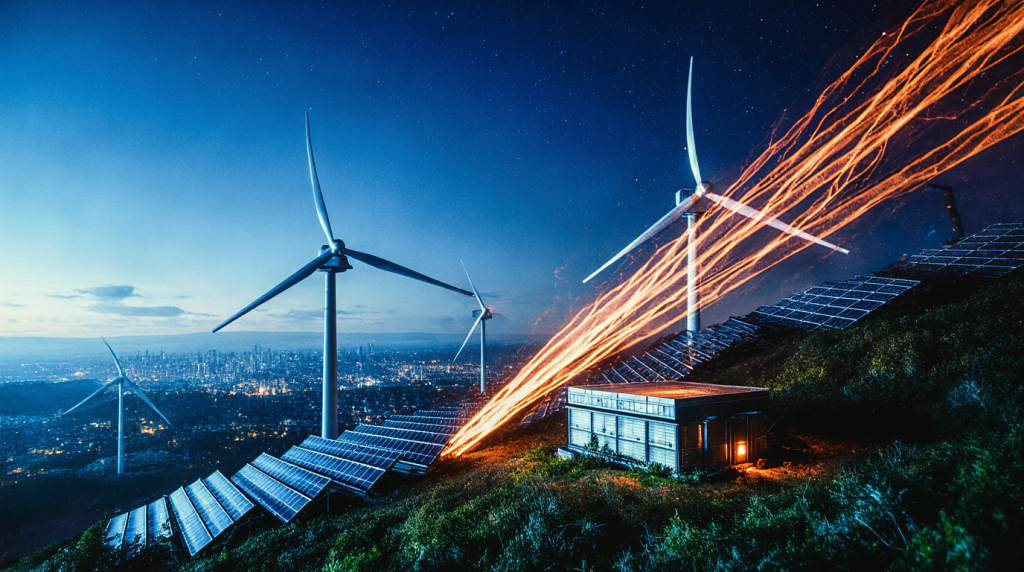
Far from being an environmental liability, Bitcoin mining has emerged as a catalyst for the global energy transition. By accelerating renewable infrastructure, decarbonizing heat, and neutralizing methane, the network is proving to be a cornerstone of 21st-century climate innovation.
According to ESG analyst Daniel Batten, the Bitcoin network has hit a major milestone in 2026: 56.7% of its total energy consumption now comes from sustainable sources. This marks a radical departure from 2021, when the figure sat at a mere 34%. However, the real story lies not in what Bitcoin consumes, but in the systemic barriers it dismantles.
1. Breaking the Renewable Interconnection Deadlock
The biggest hurdle for wind and solar projects isn’t technology—it’s the “interconnection queue.” Many green projects wait over a decade to be plugged into the grid. Bitcoin miners act as the ultimate “first buyer,” co-locating with these projects to provide immediate revenue.
- Faster ROI: Mining can slash the payback period for renewable investments from eight years to just 3.5 years.
- Grid Stability: Miners provide a “flexible load,” soaking up excess energy when the sun shines or the wind blows, preventing grid overloads and giving operators the confidence to expand capacity.
2. From Waste to Warmth: The Heating Revolution
Heating accounts for nearly half of global energy use and is still dominated by fossil fuels. Bitcoin mining flips the script by turning electricity into both financial value and industrial-grade heat.
- Urban Solutions: In Finland, mining firm MARA provides district heating for 80,000 residents, effectively warming 2% of the nation’s population with recycled server heat.
- Agriculture: In the Netherlands, Bitcoin-powered greenhouses are becoming a standard, where mining units provide the precise temperatures needed for crops while subsidizing energy costs.
3. Resurrecting “Mothballed” Tech and Empowering the Global South
Bitcoin is funding the R&D that traditional markets ignored. It has single-handedly revived Ocean Thermal Energy Conversion (OTEC)—a technology dormant since the 1980s—by providing a way to monetize power in remote offshore locations without expensive cables.
Furthermore, initiatives like Gridless Compute are utilizing stranded hydro-power in rural Africa to create microgrids. This has brought electricity to over 8,000 homes in Kenya, Malawi, and Zambia that were previously entirely off the grid.
4. The Methane Hunter: Carbon-Negative Mining
The most aggressive climate benefit comes from methane mitigation. By capturing flared gas at oil fields and methane leaks from landfills—gases far more potent than CO2—and using them to power mining rigs, the industry is actively cleaning the atmosphere.
- Net-Negative Impact: These mitigation efforts already offset 7% of the entire network’s emissions, putting Bitcoin on a clear path toward becoming a carbon-negative industry.